If you are torn between waking up to the sound of surf or stepping out to your own dock, you are asking exactly the right question in Long Beach Township. Both oceanfront and lagoonfront homes offer a true waterfront lifestyle, but they deliver it in very different ways. Understanding how the setting affects daily life, property design, flood considerations, and rental potential can help you choose with confidence. Let’s dive in.
Oceanfront vs Lagoonfront at a Glance
Long Beach Township sits on a barrier island between the Atlantic Ocean and Barnegat Bay. That geography shapes everything about waterfront ownership here, from views and access to elevation and flood exposure.
The township notes that the entire community is in FEMA’s Special Flood Hazard Area. It also explains that the island slopes from about 22 feet on the oceanside dunes down to roughly 2 to 4 feet on the bayside, which helps explain why oceanfront and lagoonfront ownership can feel so different in practice.
What oceanfront living usually means
Oceanfront homes are centered on direct beach access, open water views, and a front-row connection to the Atlantic. In current local listings, that often shows up as private beach walkways, outdoor showers, reverse-living layouts, multiple decks, rooftop decks, and ocean-facing primary suites.
This setting tends to appeal to buyers who picture their day starting with a beach walk and ending on a deck facing the water. If your ideal LBI routine revolves around the beach itself, oceanfront usually delivers that experience most directly.
What lagoonfront living usually means
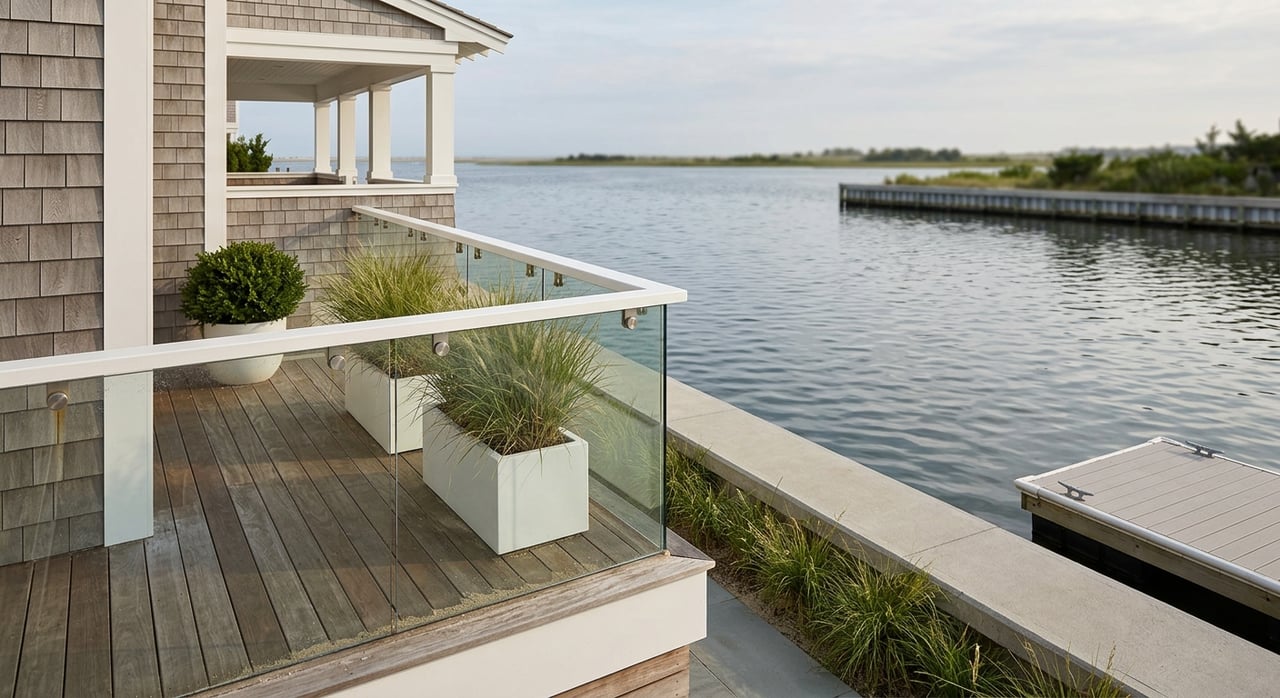
Lagoonfront and bayfront homes are built around calmer water and watercraft access. Current listing examples highlight docks, bulkheads, floating docks, boat lifts, and room for kayaks, paddle boards, and small boats.
This setting often fits buyers who want to launch from home, keep a boat nearby, or enjoy a quieter water view at the end of the day. If your version of waterfront living is tied to boating and bay access, lagoonfront may feel like the better match.
Lifestyle Differences That Matter
The biggest difference is not just the view. It is how you will actually use the property week after week.
Oceanfront living is usually about beach convenience and exposure to the shoreline environment. Lagoonfront living is usually about dock access, protected water, and a more boating-oriented routine.
Choose oceanfront if beach access leads your list
If you want to walk straight to the sand, entertain around dune-side decks, and prioritize ocean views, oceanfront tends to check those boxes best. Many oceanfront homes in the township are designed to maximize those views with elevated living areas and multiple outdoor spaces.
There is also a stewardship side to oceanfront ownership. Long Beach Township describes dunes as the first line of defense and even provides free dune grass plantings to oceanfront property owners. Beach access structures, including rollaway dune walkovers, are also regulated by the township.
Choose lagoonfront if boating leads your list
If you want a private dock, easier access for paddle boards or kayaks, and space built around a boat-friendly lifestyle, lagoonfront often stands out. Many bayfront and lagoonfront homes are designed around the water side of the lot, with wide frontage, bulkheads, docks, and lifts playing a major role in the property’s value.
For many buyers, that practical water access is the whole point. Instead of crossing a dune to reach the beach, you may be walking out to your dock and planning your day around the bay.
Home Design and Lot Layouts
Waterfront location affects more than lifestyle. It also shapes how homes are built and how lots are regulated.
Oceanfront homes often maximize height and views
Oceanfront homes in Long Beach Township often use reverse-living floor plans. That means the main living area is placed higher in the house to capture better views and light.
Current examples also show elevated decks, rooftop decks, elevators, private beach walkways, and outdoor showers. These are not just luxury touches. In many cases, they reflect how owners use the home and respond to the oceanfront setting.
Lagoonfront homes often maximize frontage and dock use
Lagoonfront and bayfront homes are often all about the water edge. Current examples in the market include homes with 35 feet of bulkheaded waterfront and a floating dock, 100 feet on the bay with a new bulkhead and dock, and wider sites with more than 100 feet of bulkheaded frontage.
That means your lot’s shape, water frontage, and existing dock setup may matter as much as the house itself. Buyers often look closely at how much room there is for docking, maneuvering, and waterfront enjoyment.
Zoning and Permits Are Not the Same
One of the most important practical differences between oceanfront and lagoonfront properties is how they are regulated. This matters if you plan to renovate, add features, or evaluate the long-term flexibility of a property.
Oceanfront parcels have specific lot rules
Long Beach Township zoning treats oceanfront parcels differently from bay or lagoon parcels. For example, in the R-10 district, oceanfront lots must have 100 feet of frontage on the ocean and 10,000 square feet of area.
The code also states that lots traversed by the oceanfront building line must keep at least 5,000 square feet of land west of that line. If you are comparing two oceanfront properties, these rules can affect what is possible on the site.
Lagoonfront setbacks are measured from the water
For lots immediately adjacent to bay or lagoon waters, the township measures setbacks from the waterline rather than the property line. No principal or accessory structure may be closer than 10 feet from the waterline.
That is a key detail for buyers considering changes near the dock, bulkhead, or rear yard. The available waterfront area may feel usable today, but future improvements still need to fit local rules.
Dock work may need state approval
If you buy lagoonfront or bayfront and want to add or reconfigure a dock, lift, pilings, or similar features, state approval may be required. The New Jersey Department of Environmental Protection says construction waterward of the mean high water line generally requires a Waterfront Development permit.
NJDEP also notes that man-made lagoons can qualify for a permit-by-certification that authorizes certain improvements such as docks, jet ski ramps, pilings, and boatlifts. The exact path depends on the property and the proposed work, so early due diligence matters.
Tidelands and riparian status deserve a close look
On lagoonfront and bayfront properties, buyers should also verify tidelands and riparian status. NJDEP states that New Jersey owns tidelands unless it has sold its interest by riparian grant.
That can matter when a dock, bulkhead, or other structure sits at or below the mean high water line. In other words, the water access features you see on site may still require a careful review of ownership and permitting history.
Flood Risk and Insurance Conversations
Flood risk should be part of any waterfront purchase in Long Beach Township. The township says the entire community is in a Special Flood Hazard Area, and it specifically notes that low-lying bayside sections have historically experienced severe flood damage.
That does not mean oceanfront is simple and lagoonfront is risky. It means both settings need thoughtful review, with attention to elevation, flood history, construction style, and insurance requirements.
Why the geography matters
The township describes oceanfront dunes as the first line of defense. It also explains that the island slopes down toward the bayside, where elevations are generally lower.
For buyers, that means flood and storm exposure conversations can differ between the two settings. It is one more reason to compare properties case by case rather than assume all waterfront homes carry the same profile.
Flood insurance is part of the decision
The township’s buyer guidance notes that standard homeowners policies usually do not cover flood. That makes flood coverage part of the purchase conversation whether you are buying oceanfront or lagoonfront.
A smart comparison goes beyond the view and list price. You also want to understand the practical carrying costs tied to the property.
Rental and Resale Considerations
Long Beach Township remains a high-value market. Spring 2026 data in the research report shows Zillow placing the average township home value at $1,970,933, while Redfin shows a Long Beach Island median sale price of $2,122,500. Redfin’s township listing page also reports 14 new listings at a median list price of $2.5 million and about 55 days on market.
Within that market, oceanfront and lagoonfront homes can both perform well, but often for different reasons.
Oceanfront may command the highest peak rental income
Current listing examples suggest that oceanfront often carries the highest short-term rental ceiling. One direct oceanfront duplex is marketed with more than $150,000 in 2026 rental income, while another oceanfront home cites more than $85,000 for one season.
That does not make every oceanfront property a rental leader. Still, the current examples point to a strong premium for direct beach access and ocean views.
Lagoonfront value often comes from utility
Lagoonfront and bayfront examples show a different type of appeal. One lagoonfront home is projected at $6,500 per week for July and August, while other bayfront properties emphasize docks, boat lifts, bulkheads, and larger water frontage.
The research report notes that this is an inference from current examples rather than a township-wide rental index. Even so, it suggests lagoonfront can compete well when private dockage and boating access are central to the renter or buyer’s priorities.
How to Decide Which Waterfront Fits You
If you are choosing between oceanfront and lagoonfront, the best answer usually comes back to how you want to live on LBI.
Ask yourself:
- Do you want direct beach access or a private dock?
- Will you use surf-side decks more often than a boat lift or floating dock?
- Are you comparing rental upside, personal enjoyment, or both?
- Do you expect to renovate, add a dock feature, or modify outdoor spaces?
- Have you reviewed flood coverage needs, permits, and site constraints for each option?
In Long Beach Township, these are two very different waterfront products. Both can be exceptional, but they serve different goals.
The right fit is the one that matches your day-to-day lifestyle, your ownership plans, and the kind of value you want from the property over time. If you want help comparing oceanfront and lagoonfront homes through the lens of lifestyle, resale, and seasonal rental potential, connect with Roberta Brackman.
FAQs
What is the main difference between oceanfront and lagoonfront homes in Long Beach Township?
- Oceanfront homes are focused on direct beach access, surf views, and dune-side living, while lagoonfront homes are typically centered on calmer water, docks, and boating access.
Do lagoonfront homes in Long Beach Township need permits for dock changes?
- Often, yes. NJDEP says work waterward of the mean high water line generally requires state authorization, and certain lagoon dock improvements may qualify under a permit-by-certification depending on the project.
Are oceanfront homes in Long Beach Township safer from flooding than lagoonfront homes?
- The township says all of Long Beach Township is in a Special Flood Hazard Area, and it notes that low-lying bayside sections have historically experienced severe flood damage. Each property should be reviewed individually for elevation, flood exposure, and insurance needs.
Do standard homeowners policies cover flood damage in Long Beach Township?
- No. The township’s buyer guidance says standard homeowners policies usually do not cover flood, so flood coverage should be part of your purchase planning.
Which property type rents better in Long Beach Township: oceanfront or lagoonfront?
- Current listing examples suggest oceanfront often has the stronger peak rental premium, while lagoonfront can perform well when private dockage and boating access are major draws.
Are zoning rules different for oceanfront and lagoonfront lots in Long Beach Township?
- Yes. The township code applies different standards, including oceanfront lot requirements in certain districts and waterline-based setbacks for lots next to bay or lagoon waters.