If you are deciding between a new build and a historic home in Beach Haven, you are not just choosing a floor plan or a finish package. You are choosing how you want to live on Long Beach Island, how much hands-on upkeep feels right, and how your property may fit your long-term goals. In a market where inventory is tight and prices are firmly in luxury territory, a clear decision matters. Let’s break down what each path really means in Beach Haven.
Beach Haven market basics
Beach Haven is a high-value coastal market with limited supply. Realtor.com’s May 2026 snapshot reported 32 active listings, a median listing price of $2.15 million, a median sold price of $2.535 million, and a median 51 days on market. Redfin’s April 2026 data showed a median sale price of $2.70 million.
That pricing tells you something important right away. In Beach Haven, age alone does not determine value. Views, location, lot, renovation level, and potential use all play a major role in how a home is positioned.
Why this choice matters in Beach Haven
Beach Haven has a distinct housing story. The borough says the town was founded in 1874, with resort-era cottages and styles such as Queen Anne and Shingle helping define its early identity. After the 1962 storm, housing patterns shifted more strongly toward elevated homes with parking below.
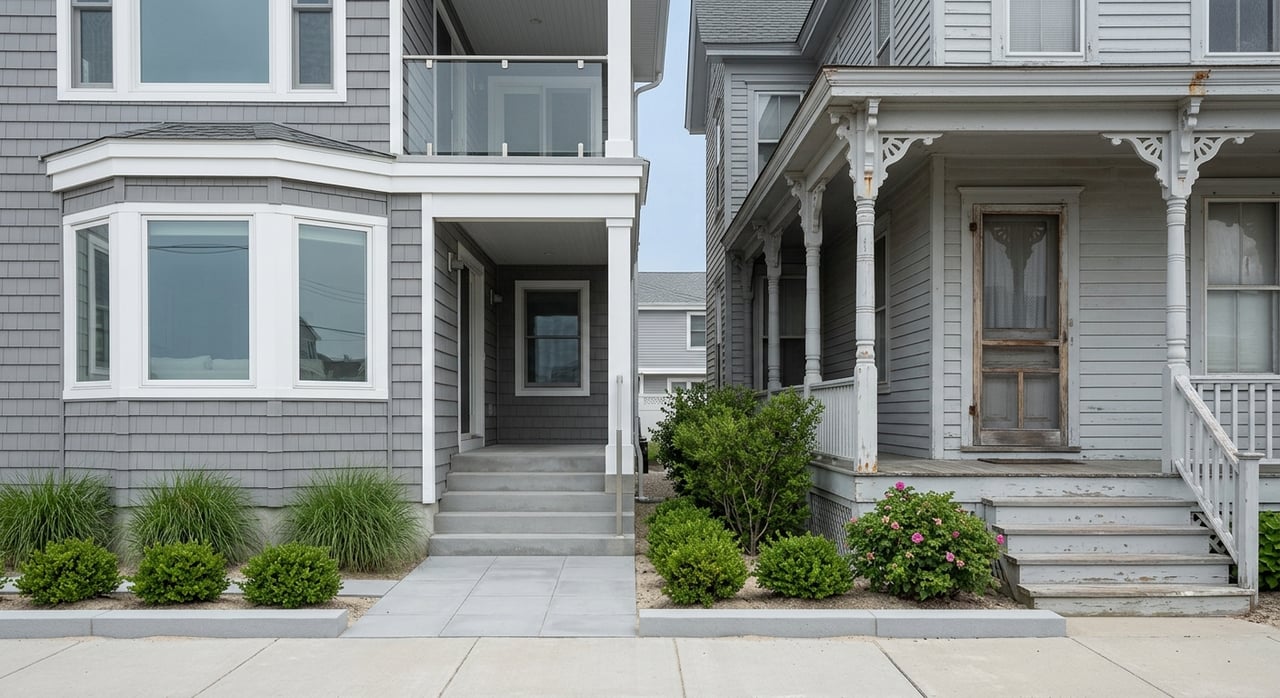
That history still shapes what buyers see today. You can find homes that reflect late-19th-century architecture and porch-centered streetscapes, and you can also find newer homes designed around modern coastal building expectations. Because Beach Haven is entirely in FEMA’s Special Flood Hazard Area, that contrast is especially relevant here.
What a historic home offers
In Beach Haven, a historic home often means more than simply “older construction.” The Beach Haven Historic District is a formal district listed by the National Park Service, with 223 contributing resources in the expanded district. The borough identifies architectural styles including Victorian Queen Anne, Gothic Revival, Italianate, Shingle, Stick, and Colonial Revival.
For many buyers, the draw is emotional as much as practical. These homes can offer distinctive architecture, porches, a strong sense of place, and the kind of curb appeal that feels tied to Beach Haven’s resort history. If you want a home with visual personality and connection to the town’s original fabric, this category can be very compelling.
Historic district review matters
If a home is in the historic district, exterior changes may involve a local review process. The borough says new construction, demolition, relocation, and major exterior work in the district require a Certificate of Appropriateness. Interior changes, repainting, and work not visible from a public way do not.
That means ownership can come with extra planning. If you want to alter porches, windows, siding, rooflines, or additions, you may need to work through design standards focused on compatibility with nearby buildings. Those standards address things like height, façade proportions, roof shape, materials, scale, and setbacks.
Maintenance is often more selective
Older homes can be comfortable and functional, but upgrades may happen in phases rather than all at once. According to the U.S. Department of Energy, older homes often benefit from insulation improvements, caulking, and weatherstripping, especially when walls are opened or siding is replaced. That can make energy improvements possible, but often less straightforward than in new construction.
There can also be tradeoffs between efficiency updates and preserving exterior character. The Environmental Protection Agency notes that replacing windows and doors can sometimes conflict with historic integrity. In practical terms, you may need to think more carefully about what to change, when to change it, and how those updates fit the home’s original design.
What a new build offers
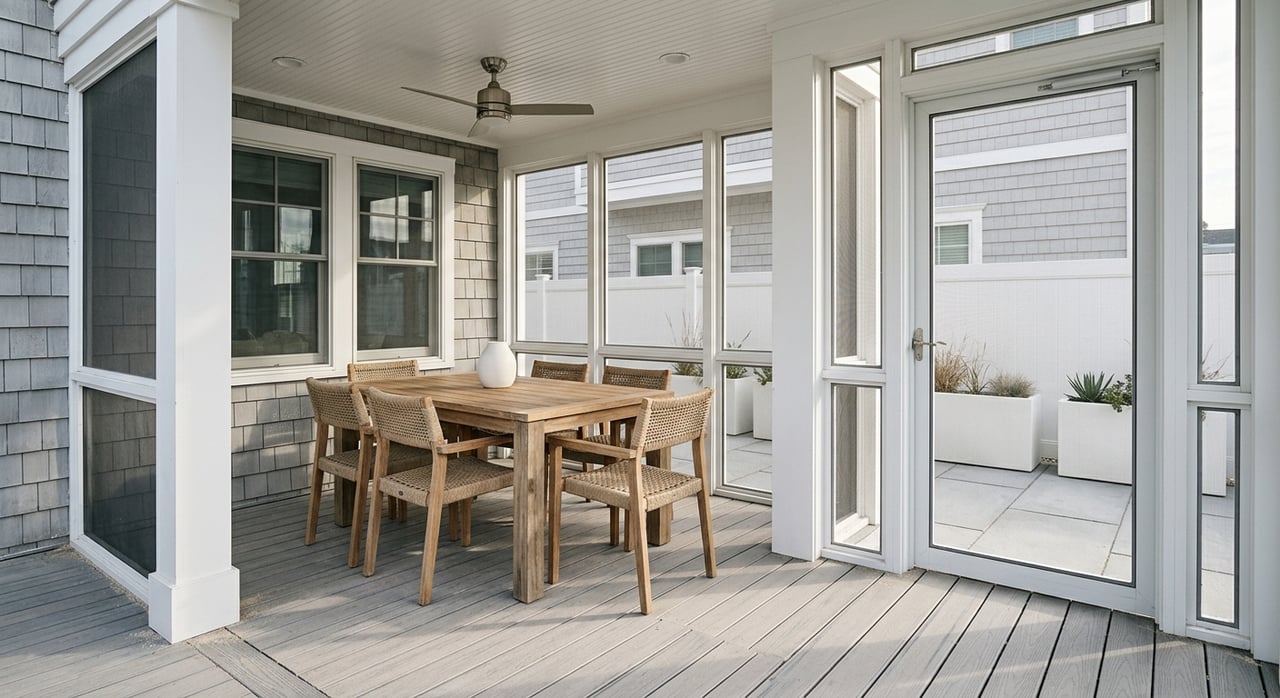
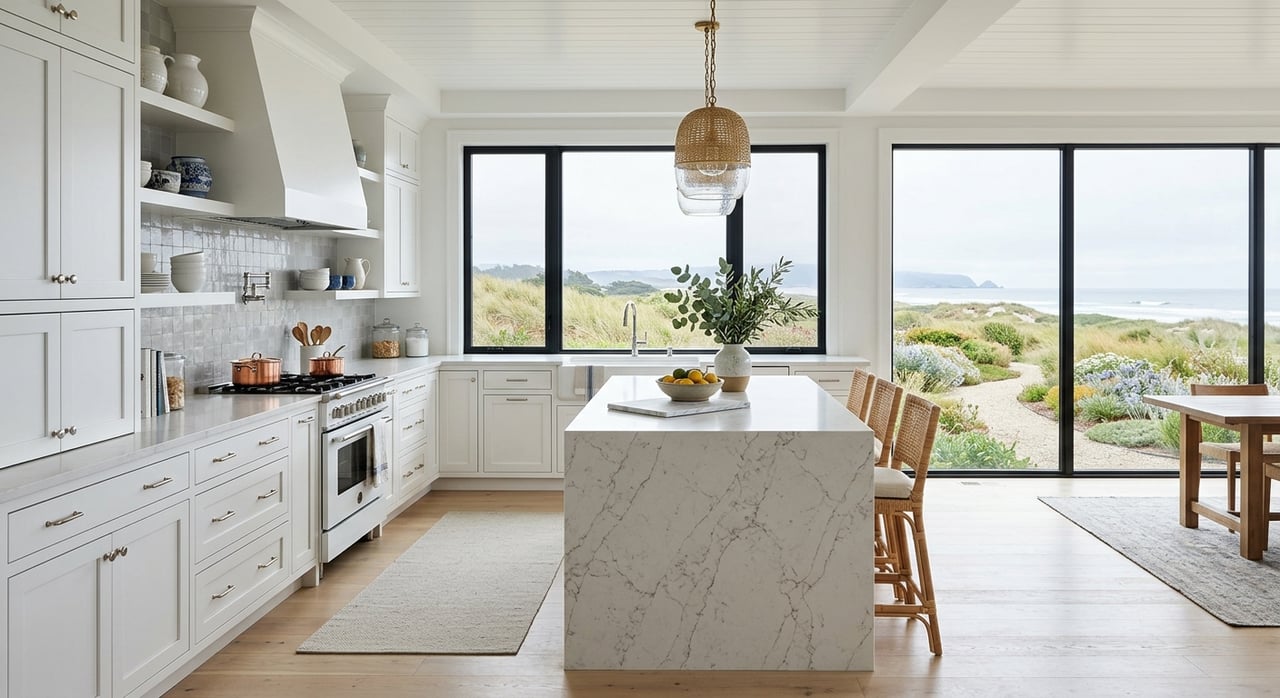
A new build usually appeals to buyers who want simplicity, performance, and fewer immediate projects. New homes often come with updated layouts, newer systems, and construction methods that align better with current coastal realities. In a place like Beach Haven, that can be a meaningful advantage.
The Department of Energy says high-performance new homes are built to rigorous standards for efficiency and durability, with air sealing and insulation playing a central role. ENERGY STAR also notes that certified new homes must meet strict energy-efficiency requirements. While not every new home carries the same certification, the general advantage of newer construction is easier access to modern systems and performance features.
Elevated design fits coastal conditions
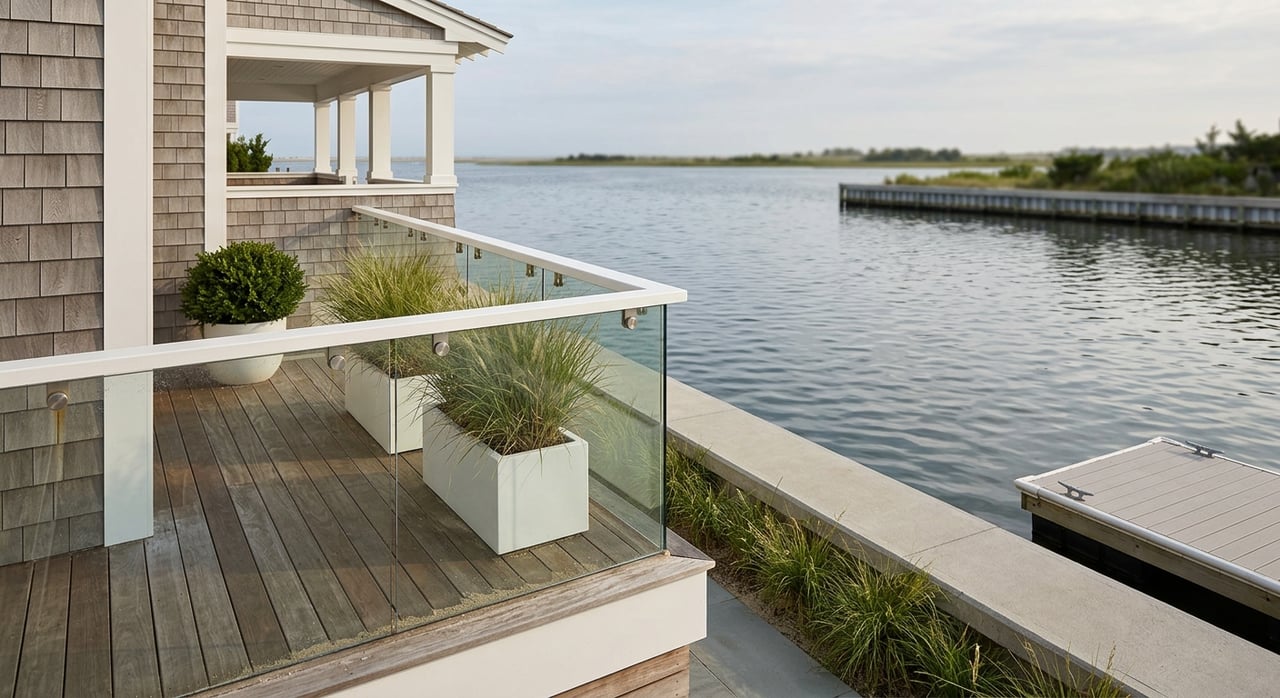
In Beach Haven, newer homes often align more naturally with the area’s floodplain conditions. The borough’s history materials note the post-1962 shift toward elevated homes on stilts, and the borough says the entire municipality is in a Special Flood Hazard Area. For a buyer, that often means a newer home is designed with current elevation expectations more clearly in mind.
This does not mean every older home is unsuitable or every new home is the same. It does mean that form matters here. A home’s elevation, layout, and construction approach can affect convenience, maintenance, and how comfortable you feel owning in a coastal setting.
Price overlap is real
Some buyers assume historic homes cost less and new builds cost more. In Beach Haven, that is not always true. Realtor.com and Redfin data suggest pricing can overlap significantly, with both new and vintage homes appearing around similar median listing levels in some snapshots.
Illustrative examples in the market show the range. Redfin’s Beach Haven new-home examples included coming-soon properties around $3.195 million to $3.5 million, often highlighting pools, garages, modern layouts, and upgraded systems. On the historic side, a restored late-19th-century home at 310 N Atlantic Avenue sold in 2025 for $3.35 million, while other vintage offerings have appeared at lower price points.
The takeaway is simple. In Beach Haven, value is driven by the full package, not just the year built. A beautifully restored historic home in a prime location can compete directly with a luxury new build.
Rental potential can look different
If you are also thinking about income, the choice may come down to what kind of rental story you want to tell. A new build may appeal to guests who prioritize turnkey comfort, updated finishes, and easy functionality. A historic home may appeal to guests who want charm, character, and a memorable Beach Haven experience.
The research report points to one Victorian at 215 Centre Street described as a landmark property that had most recently operated as a top-rated bed and breakfast, with potential as a year-round home, vacation residence, high-income rental property, or B&B. That is a useful reminder that character can be part of a property’s earning narrative.
Older rentals may have extra compliance steps
If a property is or will be used as a rental, age can create additional considerations. The borough says New Jersey’s lead-safe law applies to all pre-1978 rental properties, and Beach Haven performs visual inspections with reinspection every three years or at tenant turnover. For buyers considering a historic or older rental property, that is an important operational detail.
This does not make older rentals a poor choice. It simply means your ownership plan should account for inspections, compliance, and maintenance in a realistic way. That is especially true if rental use is central to your financial goals.
How to choose the right fit
The best choice usually starts with your priorities, not with a general rule about old versus new. In Beach Haven, both categories can make sense. The smarter question is which one fits your lifestyle, budget, and property strategy.
Choose a new build if you want
- Turnkey living with fewer immediate projects
- Modern systems and construction methods
- Easier energy performance and durability
- A home form that often aligns more naturally with floodplain realities
- Contemporary layouts, garages, and convenience-focused features
Choose a historic home if you want
- Distinctive architecture and original character
- Porches, period details, and a strong sense of place
- A home connected to Beach Haven’s resort-era identity
- The potential for a standout rental narrative
- A property you are comfortable improving thoughtfully over time
Questions to ask before you buy
Before you make an offer, it helps to get very specific about how you plan to use the home. A clear set of questions can save you from buying the wrong type of property for your goals.
Ask yourself:
- Will this be a full-time residence, second home, or rental-focused property?
- Do you want move-in-ready convenience, or are you comfortable managing updates?
- How important is architectural character to you?
- If the home is in the historic district, are you comfortable with exterior review rules?
- How much weight do you place on modern elevation and newer building systems?
- If rental income matters, what type of guest experience do you want to offer?
Why local guidance matters
In Beach Haven, the right answer is rarely obvious from photos alone. Two homes at similar price points can deliver very different ownership experiences depending on district rules, maintenance needs, elevation, and rental fit. That is why local, property-level guidance matters so much.
When you understand the tradeoffs clearly, you can buy with more confidence. You can focus on what supports your lifestyle now and protects your flexibility later, whether that means a classic Victorian with a strong sense of place or a new build designed for modern coastal living.
If you want help weighing Beach Haven new builds against historic homes, reach out to Roberta Brackman for a local, data-driven conversation about your goals, your budget, and how each option fits the way you want to live on LBI.
FAQs
What makes a Beach Haven historic home different from just an older house?
- In Beach Haven, many historic homes are part of a formal historic district with recognized architectural styles, contributing resources, and rules for certain exterior changes.
Are new builds in Beach Haven always more expensive than historic homes?
- No. Market examples show meaningful price overlap, with value often driven by location, views, lot, condition, renovation quality, and potential use rather than age alone.
Do Beach Haven historic homes require approval for renovations?
- If the home is in the historic district, major exterior work such as new construction, demolition, relocation, or visible exterior changes may require a Certificate of Appropriateness from the borough.
Why do buyers consider elevation so important in Beach Haven?
- Beach Haven is entirely in FEMA’s Special Flood Hazard Area, and the borough’s housing history reflects a shift toward elevated homes after the 1962 storm.
Can a historic home in Beach Haven still work as a rental property?
- Yes. Some historic properties can offer a distinctive rental identity, though older rental homes may also involve added maintenance planning and lead-safe inspection requirements if they are pre-1978 rentals.
Is a new build in Beach Haven usually more energy efficient?
- Often, yes. New construction generally benefits from newer insulation, air sealing, and durability standards, which can make energy performance easier to achieve than in many older homes.