Everyone on Long Beach Island has heard the good news by now: New Jersey pushed back the deadline on its new flood construction rules. What almost nobody is talking about is a second clock in Harvey Cedars that started moving the same year, runs on a different calendar, and controls a number that matters more to most renovation budgets than the state rule does.
If you own a house here, or you're under contract on one, both clocks land on your project whether you've heard of them or not.
The Rule Everyone Heard About
New Jersey's Department of Environmental Protection adopted the Resilient Environments and Landscapes rule on January 20, 2026, the final day of the Murphy administration. The headline change: a new Climate Adjusted Flood Elevation standard that sits four feet above the federal Base Flood Elevation most shore towns had used for decades. Under the rule, new construction and "substantially improved" buildings in tidal flood areas are expected to meet that higher mark once the rule fully applies.
The rule included a 180-day grace period, or "legacy" window, letting projects with a complete application on file by July 20, 2026 get reviewed under the old standard instead. That deadline drew pushback from more than 130 New Jersey mayors along with the state's builders' and business associations, who argued the standard had been finalized in the closing hours of an outgoing administration without enough input from the towns that would live with it. On May 29, 2026, the Sherrill administration announced it would propose extending that window by a full year, to July 20, 2027, and formally filed the proposal in the New Jersey Register on June 1. A public hearing followed on July 7, with written comments accepted through July 31.
As of this writing, the extension has not been formally finalized. NJDEP's own REAL rule status page confirms the department is applying the extended legacy provisions to eligible applications filed after July 20, 2026 while it works through the comment record, with final action expected imminently under the agency's own late-summer timeline. In practice, that means the reprieve is already functioning for most permit applicants even though the paperwork hasn't fully closed the loop.
That's the part of this story that's been covered everywhere. It's also not the part that decides what your kitchen-and-primary-suite addition actually costs.
The Number Harvey Cedars Already Had
Long before REAL existed, Harvey Cedars had its own trigger for when a renovation has to meet flood-elevation standards, and it has nothing to do with Trenton. Under the borough's floodplain regulations, if the cost of repairing, reconstructing, or improving a structure equals or exceeds 50 percent of that structure's replacement cost as determined by the Tax Assessor, the entire structure has to comply with FEMA's flood regulations. Historically, that has meant raising the first floor one foot above base flood elevation.
That 50 percent rule is the actual gate most Harvey Cedars owners walk through, not the state's elevation figure. It's been on the books for years, it applies whether or not your project touches CAFRA or a state wetlands permit, and it's measured against a dollar figure set by one specific office in Borough Hall.
Once REAL is fully in effect for a given project, filing timing (inside or outside the legacy window) determines whether that same 50-percent trigger points to a one-foot lift or a four-foot one:
| Standard | Elevation requirement | Where it comes from |
|---|---|---|
| Borough's pre-REAL substantial improvement rule | Base Flood Elevation + 1 ft | Harvey Cedars floodplain ordinance |
| REAL's Climate Adjusted Flood Elevation (once a project falls outside the legacy window) | Base Flood Elevation + 4 ft | NJDEP's Flood Hazard Area Control Act amendments |
| Bulkhead minimum, bay and lagoon lots | 5 ft, Mean Sea Level (NAVD 1988) | Harvey Cedars zoning code |
| Oceanfront lots along the 1965 building line | 16 ft above mean sea level, or 3 ft above street-grade centerline, whichever is higher | Harvey Cedars zoning code |
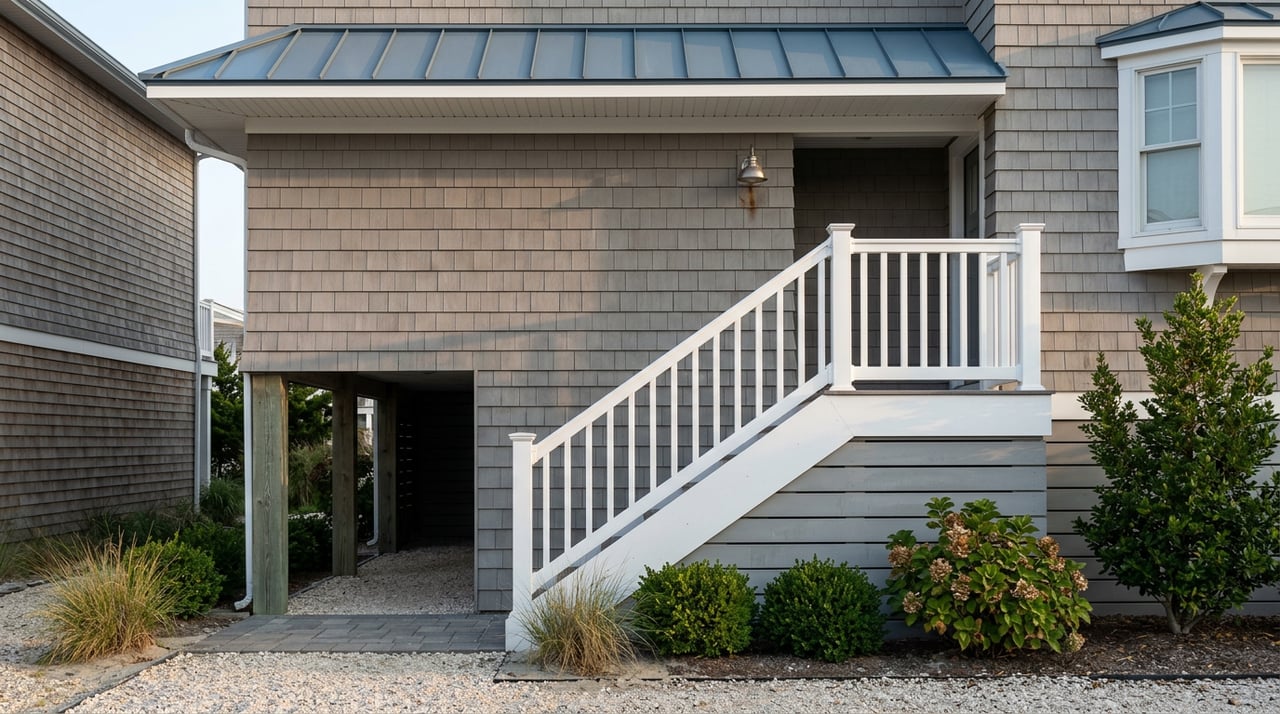
Three extra feet of required elevation isn't a rounding error on a coastal renovation. It can mean a different foundation approach, a different staircase configuration, and mechanical systems that need to move higher along with everything else.
The Other Clock: Harvey Cedars' First Revaluation Since 2004
While the state was extending its deadline, Harvey Cedars was already mid-process on something separate: a townwide property revaluation. According to The SandPaper, Mayor John Imperiale has said the borough's assessment-to-true-value ratio had slipped to 63.47 percent, low enough that the Ocean County Board of Taxation issued the revaluation order. The mayor also confirmed the borough's last full revaluation was done in 2004, with a reassessment in 2010. The current revaluation is underway now and is scheduled to take effect for 2027 tax billing, per the borough's own site, which directs questions to Tax Assessor Christopher Hackett.
Here's why that matters to the renovation math above. The borough's substantial-improvement rule doesn't measure your project cost against some abstract market value. It measures against replacement cost "as determined by the Tax Assessor." That's the same office running the current revaluation. Nobody has published a formal statement connecting the two, but the mechanics are sitting right there in the code: if your home's assessed replacement figure moves when the revaluation lands, the dollar threshold your contractor's estimate gets compared against moves with it, even if the scope of your project doesn't change at all.
A renovation quote that sits comfortably under 50 percent of your current assessed replacement cost this year could land differently once 2027 numbers are in place. That's true whether the state's REAL deadline is sitting at July 2026, July 2027, or somewhere else by the time you file.
Before You Set a Renovation Budget
A few things worth confirming before a contractor's number becomes your working budget:
- Ask the Tax Assessor's office for your property's current replacement-cost figure directly, rather than working from last year's assessment card, especially with the revaluation underway.
- Get a current elevation certificate from a licensed surveyor for your specific lot. Bulkhead height, oceanfront setback, and lot elevation all vary block to block on the island.
- Ask the Building or Zoning office which standard your permit would be reviewed under given current filing dates, since that depends on where your application falls relative to the legacy window NJDEP is still finalizing.
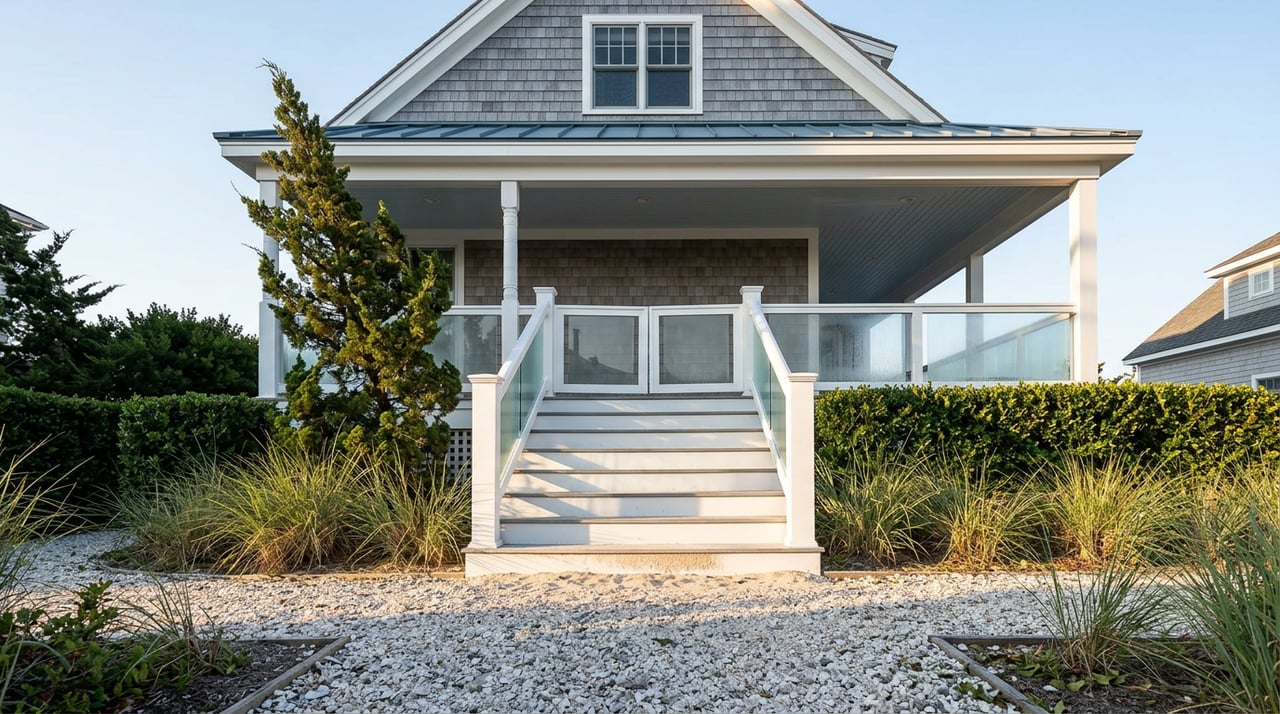
- If a full house raise is on the table, know that reconfigured entry stairs and landings tied to the raise don't count against your building coverage under the borough's zoning code, up to 200 square feet for a full elevation project. A raise costs less against your buildable footprint than most owners assume going in.
What Buyers Should Ask For At Closing
If you're on the buying side of a Harvey Cedars renovation candidate or an older home that hasn't been elevated, a few questions belong in your contingency period:
- Request a current elevation certificate before waiving inspection contingencies, not an old one from a prior sale.
- Ask whether the property sits inside the expanded Inundation Risk Zone that REAL's mapping introduced, since that shapes what future additions or rebuilds look like even if you have no immediate plans.
- Understand that REAL is a land-use and construction standard, not a flood insurance mandate. FEMA's Risk Rating 2.0 and your elevation certificate control your premium separately, so a state permitting rule changing doesn't move your insurance bill on its own.
The Takeaway
The state gave Harvey Cedars owners more runway on the rule that gets the headlines. It didn't touch the local rule that actually decides most renovation budgets, and that local rule is tied to a number the borough is actively resetting for the first time in over twenty years. If you're planning a project that gets anywhere close to half your home's value, the deadline worth watching isn't the one in Trenton. It's the one on your assessment card.
If you're weighing a renovation, a rebuild, or a purchase of an older Harvey Cedars property and want to talk through what these numbers actually mean for your specific lot, Roberta Brackman has spent years working both sides of LBI's rental and resale market and can walk you through it in plain terms. Start with a current home valuation or reach out directly to talk through timing before you commit to a renovation budget. You can also browse more on the Harvey Cedars neighborhood page or read our seller's guide for what to expect if a listing is part of your plan.
A Few Quick Questions
Do I have to raise my Harvey Cedars house right now? No. The rule applies once you propose new construction or an improvement that crosses the borough's substantial-improvement threshold. A home with no pending permit application isn't required to do anything under REAL today.
If the legacy period is extended to 2027, can I just wait to file? You can, but the extension protects projects that get a complete application in before the new deadline, not projects that simply exist. Waiting until 2027 to start paperwork means filing into whatever standard is active then, and by that point Harvey Cedars' revaluation will already have reset the replacement-cost figure your project gets measured against.
Does any of this change my flood insurance bill this year? Not directly. REAL is a land-use and construction rule. FEMA's flood maps and Risk Rating 2.0 pricing are separate systems, and your premium moves with those, not with this state permitting rule.